
Intervista a Kamal Aljafari (Interview with Kamal Aljafari)
In occasione dell'uscita in sala di "With Hasan in Gaza", la nostra intervista esclusiva al regista palestinese Kamal Aljafari. A cura di Ivan Orlandi.
English version below.
Ivan Orlandi:
Fin dal tuo primo lungometraggio, The Roof, il tuo lavoro suggerisce che il cinema possa offrire ai palestinesi un nuovo tetto, o quantomeno l'idea di una casa. In With Hasan in Gaza c'è una profonda dimensione etica, legata a quello che appare come un eterno ritorno dell'uguale: la Prima Intifada, la Seconda Intifada, quando hai girato queste immagini nel 2001, e ora la tragica distruzione degli ultimi due anni. Riguardando per la prima volta dopo tanti anni queste riprese, la dimensione temporale ti ha colpito di nuovo, oppure eri già consapevole di questa realtà?
Kamal Aljafari:
Certo, questa consapevolezza esiste già, ma è sempre diverso guardare concretamente le immagini e vedere qualcosa che dimostra che è davvero così. Il film ha una dimensione epica, perché ero alla ricerca di una persona che avevo incontrato durante la Prima Intifada, proprio mentre cominciava la Seconda. Poi ho riscoperto queste riprese dopo che era stato commesso un genocidio contro il popolo di Gaza. È quasi incredibile vedere, nel loro insieme, come il destino di un popolo passi da una tragedia all'altra, da una rivolta all'altra, da una resistenza all'altra. Questa è, di fatto, la storia della Palestina: una storia di oppressione e occupazioni, ma anche di resistenza.
I.O.: Sembra esistere un'etica specificamente palestinese del vivere in temporalità sovrapposte. Nel tuo film, il passato è già presente e parla direttamente al presente, senza bisogno di alcuna manipolazione. Come vedi questo rapporto tra memoria, tempo ed esperienza palestinese?
K.A. : C'è qualcosa, in tutto questo, che va oltre le mie decisioni di regista. Il modo in cui il film ha preso forma è profondamente legato all'esperienza palestinese stessa: l'esperienza del carcere, gli studi, il ritorno, questo viaggio, il fatto di non aver mai rivisto quelle riprese e di averle riscoperte ora, proprio quando ce n'è più bisogno. La condizione palestinese è molto peculiare sotto questo aspetto, perché, nonostante tutto, si possono sempre trovare tracce che permettono di raccontare e ricostruire un'immagine o una memoria. È questo il cuore del mio lavoro: ricostruire, rievocare, raccogliere memorie come forme di resistenza e, al tempo stesso, come modi di esistere. È tutto connesso, e non è qualcosa che si pianifica: è qualcosa che accade, che la vita stessa crea.
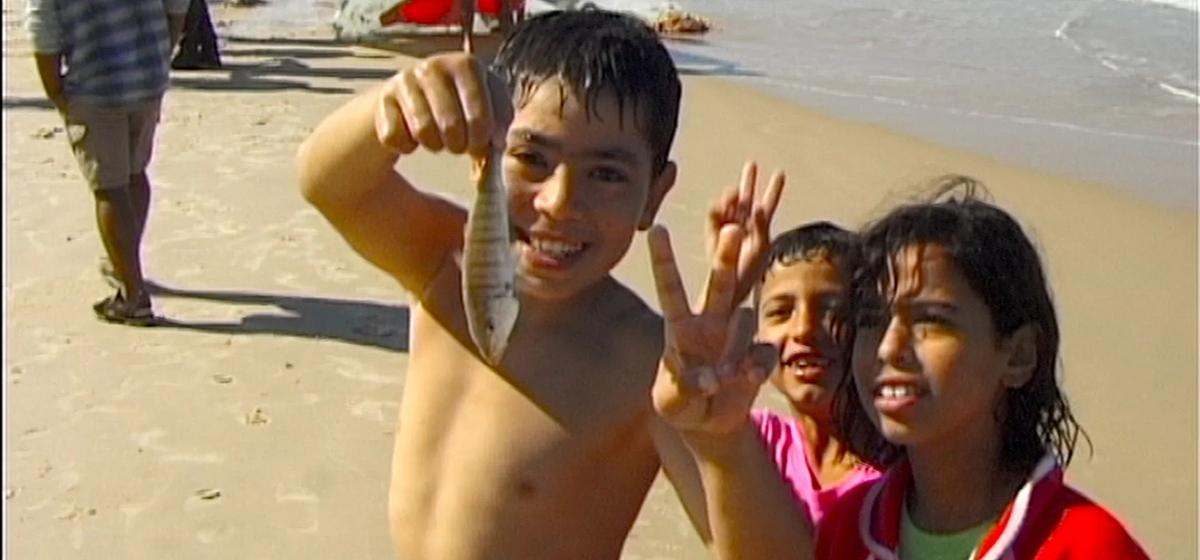
I.O.: Questa urgenza di esistere attraverso la rappresentazione emerge con particolare forza nel film attraverso i bambini, che mostrano un desiderio quasi gioioso, ma urgente, di essere ripresi.
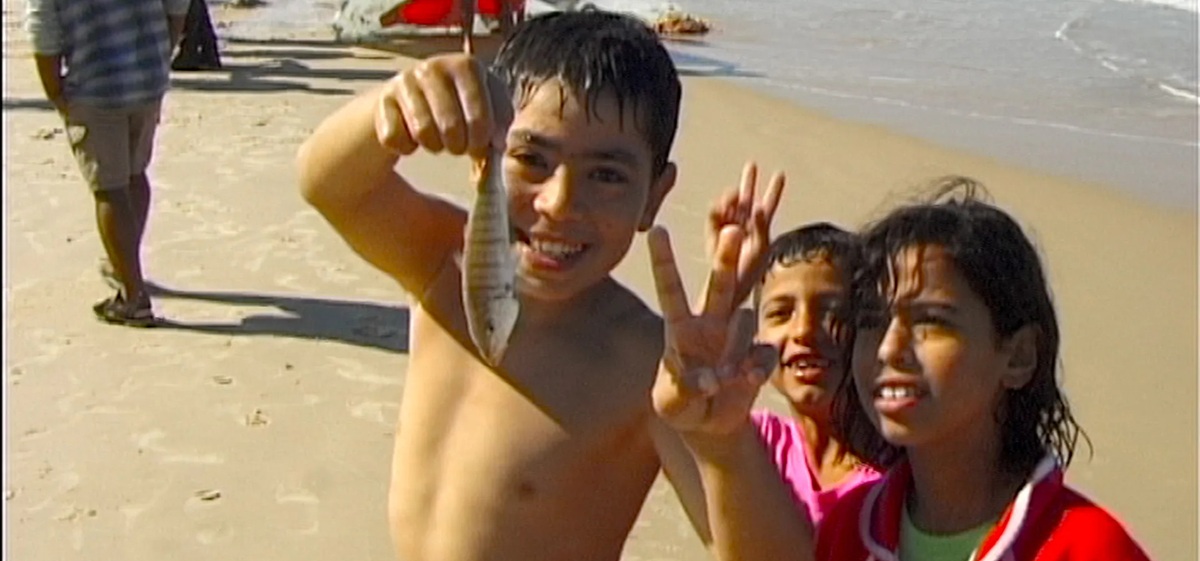
K.A. : Si vede che gli adulti erano già molto preoccupati per la presenza della videocamera e per ciò che avrebbe potuto comportare per loro. I bambini, invece, sono innocenti: non sanno ancora in che modo una videocamera possa essere usata contro di loro. Per questo sono più aperti: vogliono soltanto essere ripresi e giocare. Erano molto incuriositi dalla persona che li stava filmando. All'epoca usavo una videocamera MiniDV che, ai loro occhi, sembrava una macchina fotografica. Per questo mi chiamavano «fotografo»: pensavano che stessi scattando fotografie, non girando video. Questo rimane per me l'aspetto più doloroso del film: vedere tutti quei bambini che chiedono di essere ripresi. C'è qualcosa di profondamente potente in questo, ed è la parte del film che faccio più fatica a guardare.
I.O.: Oltre all'innocenza dei bambini, c'è anche la questione dell'innocenza della videocamera stessa, o del cinema documentario come strumento per far emergere una verità. Oggi, in un'epoca in cui si sospetta continuamente che le immagini siano costruite o manipolate, come possiamo ancora considerare l'immagine una prova e fare affidamento su di essa?
K.A. : Oggi è una domanda difficile a cui rispondere. Qualcuno può sempre dire: «Questa immagine è falsa, è stata generata con l'intelligenza artificiale». Eppure un'immagine può ancora muovere le persone, e le immagini continuano a farlo. In Italia e in tutto il mondo, le persone sono scese in piazza dopo aver visto le immagini provenienti dalla Palestina. E i palestinesi non hanno mai smesso di filmare. Gli israeliani uccidevano i giornalisti, eppure tutti continuavano a filmare e non sono mai riusciti a fermare le riprese. L'intenzione era quella di uccidere la videocamera, di uccidere le immagini. Ma quando si guarda con una certa distanza e con una consapevolezza maturata nel tempo, le immagini del 2001 assumono un impatto e un significato completamente diversi rispetto a quando le si guardava allora. All'epoca nessuno era interessato a queste persone. Purtroppo, quell'interesse è emerso solo a causa del crimine che si sta commettendo. È tragico che debbano essere uccise così tante persone perché gli altri prestino attenzione: il prezzo è altissimo. Eppure le immagini continuano ad avere un impatto: sono state loro a spingere persone in tutto il mondo a scendere in piazza.
I.O.: L'elemento più apertamente finzionale di With Hasan in Gaza sembra essere il sound design, soprattutto considerando che hai scelto di non intervenire sul montaggio originale. Come hai affrontato il suono, utilizzandolo come strumento creativo per riattivare queste immagini?
K.A. : È stato nel sound design che ha avuto luogo il vero lavoro di montaggio. L'aggiunta di questi nuovi elementi mi ha permesso di esprimere e raccontare ciò che volevo trasmettere senza doverlo mettere in parole. Ci sono riuscito attraverso diverse soluzioni sonore, come questi suoni di una serenità inquietante, e attraverso la musica inserita in varie scene. Il suono è l'elemento creativo e finzionale che si aggiunge al materiale d'archivio. È stata un'esperienza affascinante, perché il suono permette di esprimere moltissimo e di raggiungere una risonanza emotiva che soltanto la componente sonora può generare. In effetti, è proprio il suono a fare di questo un film sul presente, non sul 2001. Questo approccio emerge con particolare chiarezza nella sequenza in auto dedicata ai ricordi del carcere, verso la fine del film, subito prima dei titoli di coda. È in quel punto che la musica e il sound design hanno svolto un ruolo cruciale nel creare un'atmosfera e dare forma a ciò che volevo comunicare.
Ivan Orlandi: Ever since your first feature film, The Roof, your work has suggested that cinema can offer a new roof, or at least the idea of a home, to Palestinians. There is a profound ethical dimension in With Hasan in Gaza, tied to what feels like an eternal return of the same: the First Intifada, the Second Intifada when you shot the material in 2001, and now the tragic destruction of the last two years. Rewatching this footage for the first time after so many years, did this temporal dimension strike you anew, or was it a reality you were already aware of?
Kamal Aljafari: You have that knowledge, of course, but it is always different when you actually watch the images and see things that prove it to be true. There is an epic aspect to the film, because I was searching for someone I met during the First Intifada just as the Second Intifada had begun. And then I discovered the footage after a genocide was committed against the people of Gaza. Everything together is almost unbelievable, how the fate of the people moves from one tragedy to another, from one uprising to another, from one resistance to another. The history of this is, in fact, the history of Palestine: a history of oppression and occupations, but also a history of resistance.
I. O. : There seems to be a specific Palestinian ethics of living within overlapping temporalities. In your film, things from the past are already actual; they speak directly to the present without needing any manipulation. How do you view this relationship between memory, time, and the Palestinian experience?
K.A. : There is something here that goes beyond my decisions as a filmmaker. The way this film came to be is deeply linked to the Palestinian experience itself—having gone through these experiences of being in prison, going to study, returning, making this trip, never watching the footage, and then discovering it now, when it is needed the most. The Palestinian condition is very unique in that sense, because despite everything, you can always find traces of how to narrate and reconstruct an image or a memory. That is at the core of what I have been doing: this work of reconstruction, of recollection, of gathering memories as a way of resisting and as a way of existing at the same time. It is all connected, and it is not something you plan; it is something that happens, that life creates.
I. O. : This urge to exist through representation is particularly vivid in the film through the children, who show an urgent, almost joyful enthusiasm to be captured on camera.
K.A. : You can observe that the adults were already very worried about the presence of the camera and what it could do to them. The children, however, are innocent; they do not know yet how a camera can be used against them. So they are more open—they just want to be filmed and to play. They were very curious about the person filming. At the time, I was using a MiniDV camera, so to them it looked like a still camera, which is why they referred to me as a photographer; they thought I was taking photos, not videos. This is still the most painful aspect of the film for me: seeing all these children asking to be filmed. There is something profoundly powerful in this, and for me, it is the most difficult part of the film to watch.
I. O. : Beyond the innocence of the children, there is also the question of the innocence of the camera itself, or of documentary cinema as a tool to uncover truth. Today, when images are constantly suspect of being manufactured or fabricated, how can we still speak of or rely on the image as evidence?
K.A. : It is a difficult question to answer today. Someone can always say, "Oh, this image is fake, it is AI." But at the same time, an image can still move people—and images have been moving people. People took to the streets in Italy and around the world because of images coming from Palestine. And Palestinians never stopped filming. The Israelis were killing journalists, yet everybody was filming, and they never managed to stop it. The intention was to kill the camera, to kill the images. But when you have a certain distance and a knowledge that has developed over time, looking at images from 2001 has a completely different impact and meaning than watching them back then. Back then, there was no interest in these people. Sadly, that interest only emerged because of the crime being committed. It is tragic that so many people have to be killed for others to pay attention; the price is very high. Yet images still have an impact—that is what moved people all over the world to take to the streets.
I. O. : The most overtly fictional element in With Hasan in Gaza seems to be the sound design, especially since you refrained from manipulating the original montage. How did you approach sound as a creative tool to reactivate these images?
K.A. : The sound design was where the real editing took place. Adding these new elements helped me express and narrate what I wanted to convey without having to put it into words. This was achieved through different sonic expressions (like these eerie, serene sounds) as well as the music added to various scenes. Sound is the creative, fictional element brought to the archival material. It was a fascinating experience, because sound allows you to express so much and achieve an emotional resonance that only audio can create. In fact, the sound is precisely what makes the film about today rather than about 2001. This approach manifested itself most clearly in the sequence about the prison memories, in the car near the end of the film right before the end credits. That is where the music and the sound design played a crucial role in creating an atmosphere and expressing what I wanted to express.